


Mercari: Buy and Sell App
4.7162.94K Reviews
App Specs
- Version
- 9.41.1
- Updated On
- License
- Free
- Downloads
- 10,000,000+
- Developer
- Mercari, Inc
- Categories
- Shopping
- Platform
- Android, iOS
Screenshots





 Analysis by AppCompare
In a shared home, secondhand shopping can become a small group project: one person spots a useful bargain, someone else checks whether it will fit, and a third has a box of things that could be sold instead. I find Mercari: Buy and Sell App most useful when people treat it as a place to browse and organize those decisions, rather than assuming every interesting listing is an automatic win. It is a free shopping app from Mercari, Inc, built around buying new-to-you finds and selling pre-owned belongings.
When a household shops together
A practical use is looking for a replacement or a hobby item that does not need to be brand new. Say a household wants a particular kitchen gadget: one person can search, save promising listings, and show the options to whoever will actually use it. That pause matters. A low price is less appealing if the condition is unclear, the photos leave out a key detail, or the item is not the right version.
Mercari’s browsing and saved-item tools suit that kind of comparison better than a quick impulse purchase. I would use likes as a shortlist, then revisit the listing details before deciding. For a shared purchase, agree on the target condition and spending limit outside the app first; a saved listing is a reminder, not a household approval system.
Keep account ownership clear
Because buying and selling involve messages and transactions, I would keep the account tied to one responsible adult rather than passing a logged-in phone around without a plan. That person can handle questions from sellers, decide whether a listing is suitable, and keep track of what was bought or listed. This is especially helpful when several people share a device: the app may be on the same screen, but the choices and conversations still belong to the account holder.
For selling, take a moment to agree on what is actually yours to list. In a busy household, an unused item can still belong to someone else, or be needed later. Photographing and describing only items the account holder has permission to sell prevents avoidable misunderstandings. I would also keep personal details out of listing photos; a clear image of the item is useful, while visible addresses, documents, or family photos are not.
Coordination without confusion
Mercari can help a household compare options, but it should not be treated as a shared checklist or family inventory. If two people are independently browsing, they can accidentally pursue the same item or miss that another person has already decided against it. A simple message or note outside the app can keep the group aligned: record the item, who is checking it, and whether anyone has committed to buying.
When selling, decide who will answer buyer questions and prepare the parcel before a listing goes live. That small bit of coordination matters more than it might seem. A quick response and an accurate description help keep expectations sensible, while a household that cannot agree on who will pack or send an item may be better off waiting to list it.
Worth Reading Before You Choose

EA SPORTS FC Mobile 26 Is a Bigger Football Game, but It Takes Time

Flipboard Shows What News Apps Must Do Beyond the Feed

Switching to Android Auto Means Rethinking Your Driving Routine

Google Calendar Makes a Crowded Week Easier to Manage

Ludo King Makes the Most of the Minutes Between Plans

Baby Panda World Brings Quick Play to Modern Phones, but Its Game Library Feels Busy
Age, trust, and sensible expectations
The app is rated Teen, but that label is not a substitute for an adult’s judgment about spending, messages, or what is appropriate to buy and sell. I would involve a parent or guardian where needed and make sure the person responsible understands the transaction before money or household belongings are involved. The marketplace format makes many kinds of goods easy to discover, so browsing together can be a more thoughtful approach for younger users than leaving every decision to chance.
Mercari has an average rating of 4.7 from around 608,000 ratings, and it has been installed over 10 million times. Those figures suggest a widely used service, not a guarantee that every seller, listing, or transaction will be trouble-free. I still look closely at item condition, photos, and the seller’s answers, and I avoid treating a polished listing as proof that a product is exactly as expected.
Who will get the most from it?
I’d recommend Mercari to people who enjoy hunting for specific secondhand items, want to compare condition and price across listings, or have a manageable pile of belongings to sell. It can be especially handy when the goal is to find something particular rather than browse a local sale with limited choice. Its shopping focus also makes it a reasonable starting point for someone who wants both sides of a resale marketplace in one app.
It is less suitable if you need an item immediately, want to inspect it in person before paying, or dislike taking photos, writing descriptions, and handling a parcel. A nearby pickup listing or a conventional retailer may be a better fit when speed, face-to-face inspection, or a predictable new-product purchase matters more than finding a secondhand deal. Selling also takes effort: creating a listing is only the first step, and a buyer may need clarification before deciding.
How it compares with other ways to shop
Compared with a neighborhood classifieds group, Mercari puts browsing, saved listings, messages, and transactions in one app, which can feel more organized than juggling posts and separate conversations. A local marketplace may still win when you want to inspect an item or arrange a nearby handoff. Compared with buying new from a retailer, Mercari offers the possibility of finding used or unusual goods, but you need to judge each listing on its own details instead of relying on a standard product page.
For sellers, the trade-off is reach and convenience against preparation and shipping work. A local sale can avoid packing, while Mercari’s broader marketplace may make it easier to find someone interested in a less common item. I would choose based on the object: ordinary bulky household goods are often simpler to sell nearby, while compact items that are easy to photograph and package are more natural candidates for an app-based listing.
Getting Started with Mercari
First off, setting up an account on Mercari is a breeze. With just a few taps, you’ll be ready to start listing items. The app’s interface is clean and intuitive, making navigation a walk in the park. As soon as I logged in, I was prompted to explore different categories, ranging from fashion to electronics. It’s like stepping into a digital marketplace where you can find almost anything.
Listing Your Items
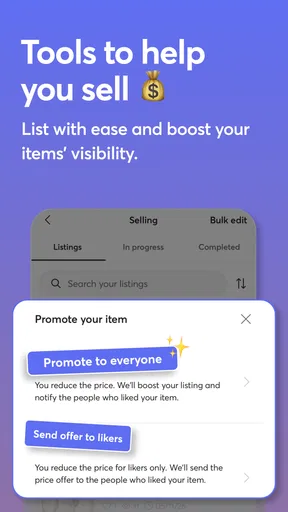
One of the most impressive features is how simple it is to list items. Snap a photo, fill in the details, set your price, and voila! Your item is ready for the world to see. Mercari even suggests pricing based on similar listings, which is a nifty tool if you’re unsure about how to price your items. I found the photo editing options quite handy, allowing me to enhance the images right within the app.
My useful listing habit is to photograph the item from more than one angle and show any wear plainly, rather than relying on an edited image to make it look flawless. A pricing suggestion is a starting point, not a promise that a buyer will pay that amount; comparable listings can differ in condition and completeness. I would also write down what is included, especially for electronics or sets with small parts. That detail can answer a buyer’s likely question before a message is needed.
Buying Made Easy
On the flip side, if you're in a shopping mood, browsing through listings is equally effortless. The search function is robust, letting you filter by category, price, and even condition. I tried searching for vintage video games, and within seconds, I was scrolling through a treasure trove of nostalgia. The app also has a ‘like’ feature, so you can save items to check out later.
For a focused search, I would start with the exact product name or model, then widen the wording if the results are thin. Condition filters help narrow the field, but they do not replace reading the description. With used goods, two listings marked similarly can still differ in visible wear, included accessories, or how clearly the seller explains the item. Saving a few options makes comparison easier, particularly when you are deciding whether a slightly better condition is worth choosing over a lower asking price.
Transaction Safety
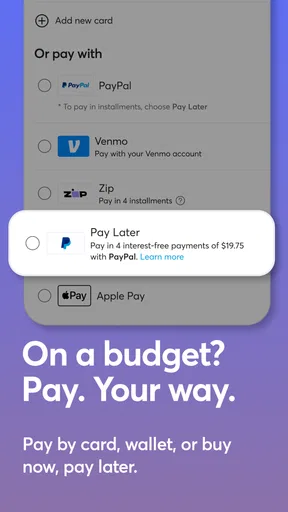
Safety is a big deal when it comes to buying and selling online, and Mercari takes this seriously. All transactions are processed securely within the app. They even hold the payment until the buyer confirms they've received the item, adding an extra layer of security. I appreciated this aspect, as it gave me peace of mind knowing my money was safe until I had the product in hand.
I still treat that process as one safeguard rather than a reason to skip careful checking. Before buying, I would ask a specific question if a photo or description leaves something important unclear, and keep the answer in the app’s conversation. Once an item arrives, take time to compare it with the listing before confirming receipt. This is a sensible habit for any secondhand purchase: make the decision based on the item and the stated process, not simply on the reassurance of a transaction screen.
Communication and Support
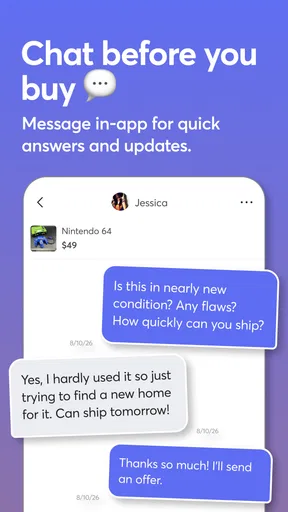
Communication with buyers or sellers is streamlined through the in-app messaging system. I had a few questions about an item I was interested in, and the seller responded promptly. It’s nice not having to leave the app to send an email or make a call. Plus, Mercari’s customer support is easy to reach if you run into any hiccups. I had a minor issue with a listing, and the support team was quick to resolve it.
Messaging is most useful when the question is concrete: ask about a mark, a missing component, or another detail that could change your decision. I would not assume every seller will reply at the same pace, so time-sensitive shopping is a poor match for a listing that needs clarification. Keeping the conversation in the app also makes it easier to refer back to what was discussed if there is confusion later.
Shipping Made Simple
One of the standout features is the shipping process. Mercari provides prepaid shipping labels, taking the guesswork out of how to send your items. You can choose to handle shipping yourself if you prefer, but I found the prepaid option to be super convenient. Just print the label, slap it on the package, and drop it off at the carrier. Easy peasy!
Even with a label ready, shipping still calls for a little planning. Before listing, I would check that the item can be packed safely and that someone at home can prepare it if it sells. Choose packaging that protects the object, and avoid waiting until the last minute to locate a suitable box or wrap. The choice to handle shipping yourself may suit a seller with a preferred method, but it also means taking responsibility for those details instead of treating dispatch as automatic.
Fees and Pricing
While Mercari does charge a 10% selling fee, it's pretty standard compared to other platforms. Given the simplicity and reach of the app, it feels like a fair trade-off. Plus, no listing fees mean you can post as many items as you want without worrying about upfront costs.
Fee details can change over time, so I would check the current terms in the app before setting a price rather than making a decision from an old estimate. The practical lesson is to work backward from the amount you hope to receive: consider the selling fee and the effort of preparing and shipping the item, then decide whether listing is worthwhile. For something with little resale value, donating or giving it away may be more satisfying than managing a sale.
Version and everyday fit
The current version is 9.36.0, and the app supports devices running iOS 7.1 or later. Mercari has been available since September 1, 2014, which gives it a long history as a shopping option. I would still keep the app updated where possible, especially if I rely on it for messages or active listings; a marketplace is only convenient when I can keep up with a conversation and any decisions that follow.
Because it is free to install, it is easy to try without paying just to browse or prepare a listing. The more meaningful cost is the time spent comparing products, taking useful photos, answering questions, and packing a sale. The audience is substantial, but the best results still depend on realistic expectations and clear communication rather than assuming that every item will sell quickly.
A household verdict
For a household, I see Mercari as a useful shared discovery space, not a substitute for deciding who owns an account, who approves a purchase, or who is responsible for posting and sending an item. Its Teen content rating makes age an important part of that conversation, while its shopping and resale focus gives families practical reasons to browse together. I would use it when everyone understands the plan and the item is easy to assess from a listing.
In conclusion, Mercari offers a seamless buying and selling experience that’s hard to beat. Whether you’re looking to clear out your closet or hunt for deals, this app provides a reliable and user-friendly platform to get the job done. Its strong focus on security and ease-of-use makes it a top contender in the world of online marketplaces. So go ahead, give it a whirl—you might just find treasures you didn't even know you were looking for, or turn your unused items into cash. Happy selling, and even happier shopping!
Pros
- Easy-to-use interface for quick navigation.
- Wide range of items available for purchase.
- Secure payment system protects transactions.
- Option to negotiate prices with sellers.
- Notifications for price drops and new listings.
Cons
- Limited customer support availability.
- Shipping costs can be high for some items.
- Occasional delays in seller responses.
- App may crash on older devices.
- Some scams reported by users.
FAQs for Mercari: Buy and Sell App
What is Mercari and how does it work?
Mercari is a popular e-commerce app that allows users to buy and sell a wide variety of items, including clothing, electronics, and home goods. Users can easily list items for sale by uploading photos and adding descriptions. Buyers can browse categories, make purchases, and communicate with sellers directly within the app.
Is Mercari safe to use for buying and selling?
Mercari implements several safety features, such as secure payments and user ratings, to enhance user trust. Transactions are protected, and users are encouraged to communicate and complete payments within the app. Mercari also offers a buyer protection program, ensuring that items received are as described or the buyer can request a refund.
What are the fees associated with selling on Mercari?
Mercari charges a flat 10% selling fee on every completed transaction. This fee is deducted from the seller’s earnings. There are no listing fees or costs to create an account, making it a straightforward platform for sellers to start listing items without any upfront costs.
How does shipping work on Mercari?
Mercari offers multiple shipping options. Sellers can choose to ship items on their own or use Mercari’s prepaid labels, which often provide discounted shipping rates. The cost of shipping can be covered by the seller or the buyer, depending on the listing setup, allowing flexibility in how transactions are handled.
Can I return items purchased on Mercari?
Returns on Mercari are not typical unless the item received is not as described. The platform encourages buyers to communicate with sellers to resolve any issues. If an item is significantly different from its listing, buyers can request a return through Mercari’s support team, who will mediate the process.


